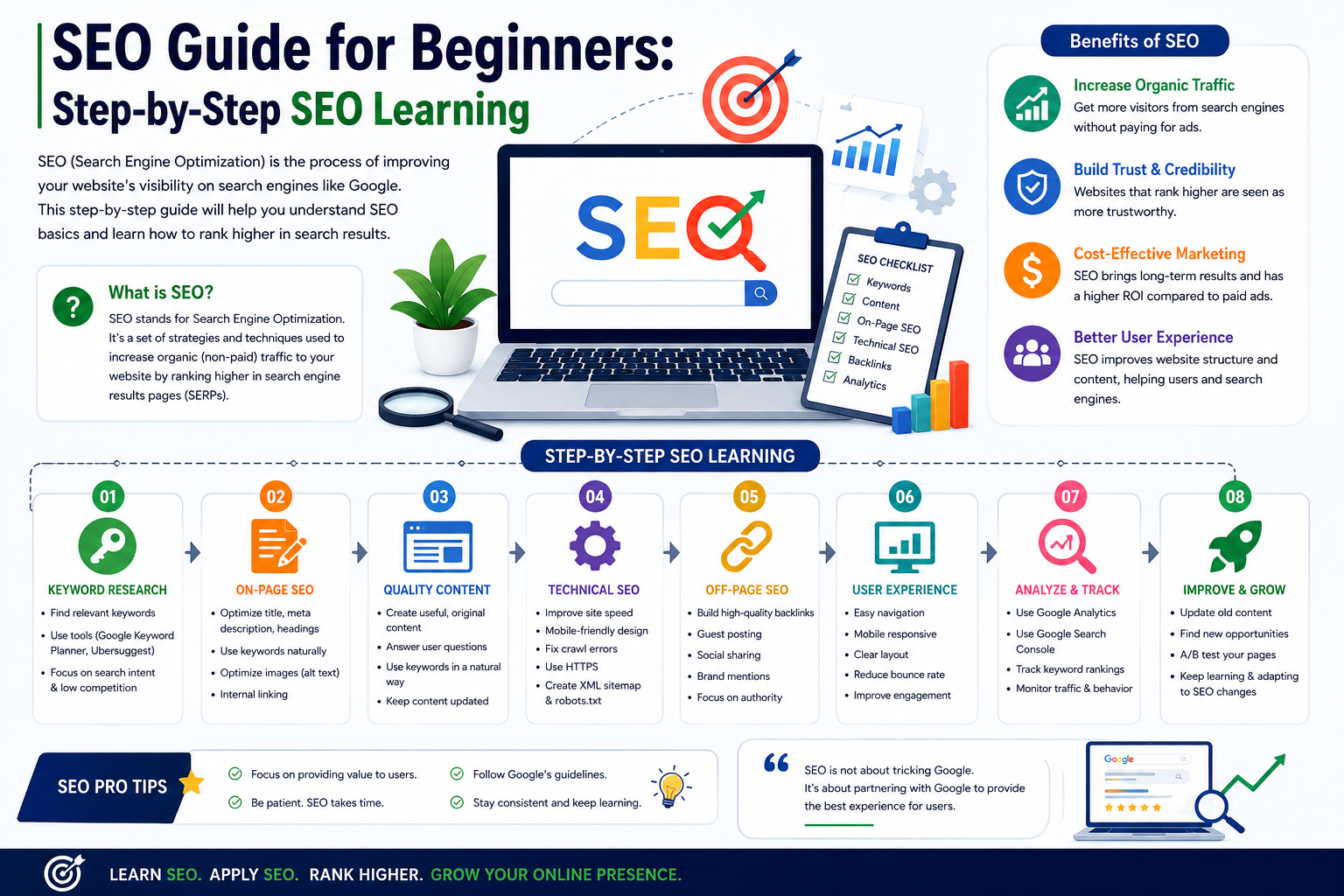
In today’s digital world, having a website is not enough. If people cannot find your website on search engines like Google, your content may never reach its target audience. This is where Search Engine Optimization (SEO) becomes important. SEO helps websites rank higher in search results, attract more visitors, and increase online visibility.
For beginners, SEO may seem complicated, but the basics are easy to understand. By learning the right SEO techniques, you can improve your website’s performance and gain more organic traffic without spending money on advertisements. This SEO guide for beginners explains everything step by step in simple English.
What Is SEO?
SEO stands for Search Engine Optimization. It is the process of improving a website so that it appears higher in search engine results when users search for specific keywords.
The main goal of SEO is to increase organic traffic. Organic traffic refers to visitors who find your website through search engines naturally instead of paid advertisements.
SEO helps:
- Increase website visibility
- Attract targeted visitors
- Improve user experience
- Generate leads
- Increase sales and revenue
A well-optimized website has a better chance of ranking on Google’s first page.
Why Is SEO Important?
Millions of websites compete for attention online. Most users click on results that appear on the first page of Google.
SEO is important because it:
- Improves search rankings
- Increases website traffic
- Builds credibility and trust
- Provides long-term results
- Helps businesses grow online
Without SEO, even great content can remain hidden from potential visitors.
How Search Engines Work
Before learning SEO techniques, it is important to understand how search engines work.
Search engines follow three main steps:
Crawling
Search engines use bots called crawlers to discover web pages on the internet.
Indexing
After discovering a page, search engines store and organize its content in a database called an index.
Ranking
When users search for information, search engines analyze indexed pages and display the most relevant results.
The goal of SEO is to help search engines understand your content better and rank it higher.
Types of SEO
SEO can be divided into several categories.
On-Page SEO
On-page SEO focuses on optimizing content and elements directly on your website.
Examples include:
- Title tags
- Meta descriptions
- Keywords
- Headings
- Images
- Internal links
Off-Page SEO
Off-page SEO involves actions taken outside your website to improve authority.
Examples include:
- Backlinks
- Social sharing
- Brand mentions
Technical SEO
Technical SEO focuses on website performance and structure.
Examples include:
- Website speed
- Mobile-friendliness
- XML sitemaps
- Secure HTTPS connections
All three types of SEO work together to improve rankings.
Step 1: Perform Keyword Research
Keyword research is the foundation of SEO.
Keywords are words and phrases users type into search engines.
For example:
- SEO Guide for Beginners
- SEO Tips
- Learn SEO
- Search Engine Optimization
Keyword research helps identify topics people are searching for.
Popular keyword research tools include:
- Google Keyword Planner
- Ubersuggest
- Ahrefs
- SEMrush
Choose keywords with good search volume and reasonable competition.
Step 2: Create High-Quality Content
Content is one of the most important ranking factors.
Google prefers content that:
- Provides value
- Answers user questions
- Is original
- Is easy to read
- Solves problems
When creating content:
- Use simple language
- Write clear headings
- Add examples
- Keep paragraphs short
Quality content improves both rankings and user experience.
Step 3: Optimize Your SEO Title
The SEO title is the first thing users see in search results.
A good SEO title should:
- Include the focus keyword
- Be attractive
- Stay under 60 characters
Example:
SEO Guide for Beginners: Learn Search Engine Optimization Step by Step
An optimized title improves click-through rates and rankings.
Step 4: Write an Effective Meta Description
The meta description summarizes your page content.
A good meta description should:
- Include the focus keyword
- Explain the article clearly
- Encourage users to click
Example:
Learn SEO step by step with this beginner-friendly guide. Discover keyword research, on-page SEO, and ranking strategies to increase website traffic.
Meta descriptions improve search result visibility.
Step 5: Use Heading Tags Properly
Headings help organize content and improve readability.
Use:
- H1 for the main title
- H2 for major sections
- H3 for sub-sections
Proper heading structure helps both users and search engines understand your content.
Step 6: Optimize Images
Images improve user experience and make content more engaging.
SEO image optimization includes:
- Compressing image sizes
- Using descriptive file names
- Adding alt text
- Choosing relevant images
Optimized images help improve page speed and accessibility.
Step 7: Improve Website Speed
Website speed is an important ranking factor.
A slow website can:
- Increase bounce rates
- Reduce conversions
- Lower rankings
Ways to improve speed:
- Compress images
- Use quality hosting
- Enable caching
- Minimize unnecessary plugins
Fast websites provide a better user experience.
Step 8: Make Your Website Mobile-Friendly
Most internet users browse websites using smartphones.
A mobile-friendly website should:
- Load quickly
- Display properly on all devices
- Be easy to navigate
Google uses mobile-first indexing, making mobile optimization essential.
Step 9: Use Internal Linking
Internal links connect pages within your website.
Benefits include:
- Better navigation
- Improved SEO
- Increased page views
- Better content discovery
Example:
If you have a blog about digital marketing, link related SEO articles together.
Internal linking helps search engines understand your website structure.
Step 10: Build Quality Backlinks
Backlinks are links from other websites pointing to your website.
Search engines view backlinks as votes of confidence.
Ways to earn backlinks:
- Publish quality content
- Guest posting
- Create useful resources
- Build relationships with other website owners
Quality backlinks improve website authority and rankings.
Step 11: Focus on User Experience
Google wants users to have a positive experience.
Important factors include:
- Easy navigation
- Clear design
- Fast loading speed
- Helpful content
A good user experience can improve rankings and conversions.
Step 12: Optimize for Featured Snippets
Featured snippets appear at the top of Google search results.
To increase your chances:
- Answer questions clearly
- Use bullet points
- Write concise explanations
- Use proper headings
Featured snippets can significantly increase traffic.
Common SEO Mistakes to Avoid
Many beginners make SEO mistakes that hurt rankings.
Avoid:
Keyword Stuffing
Using keywords excessively can lead to penalties.
Duplicate Content
Always publish original content.
Ignoring Mobile Optimization
Mobile-friendly websites perform better.
Slow Website Speed
Slow websites lose visitors and rankings.
Poor Internal Linking
Link relevant pages together to improve navigation.
Buying Low-Quality Backlinks
Focus on earning natural backlinks instead.
Best SEO Tools for Beginners
Several tools can help improve SEO performance.
Google Search Console
Monitors website performance in Google Search.
Google Analytics
Tracks website traffic and user behavior.
Ubersuggest
Provides keyword research and SEO insights.
Ahrefs
Offers backlink analysis and keyword tracking.
SEMrush
Provides comprehensive SEO and marketing tools.
These tools help beginners understand and improve SEO.
Benefits of Learning SEO
Learning SEO provides many advantages.
More Website Traffic
Higher rankings lead to more visitors.
Better Brand Visibility
More people discover your content.
Cost-Effective Marketing
SEO generates traffic without paying for ads.
Long-Term Results
Quality SEO efforts can produce lasting benefits.
Career Opportunities
SEO skills are in demand worldwide.
Future of SEO
SEO continues to evolve as search engines become smarter.
Important trends include:
- Artificial Intelligence
- Voice Search Optimization
- Mobile-First Indexing
- User Experience Signals
- High-Quality Content
Staying updated with these trends can improve future rankings.
Conclusion
This SEO guide for beginners provides a step-by-step introduction to Search Engine Optimization. SEO helps websites rank higher, attract more visitors, and achieve long-term growth. By learning keyword research, creating quality content, optimizing website performance, and building backlinks, beginners can improve their search engine rankings and online visibility.
SEO requires patience and consistency, but the results can be extremely rewarding. Start applying these techniques today and gradually improve your website’s performance in search engines.
Digital Marketing Tips and Techniques for Better Online Success
Google Search Console