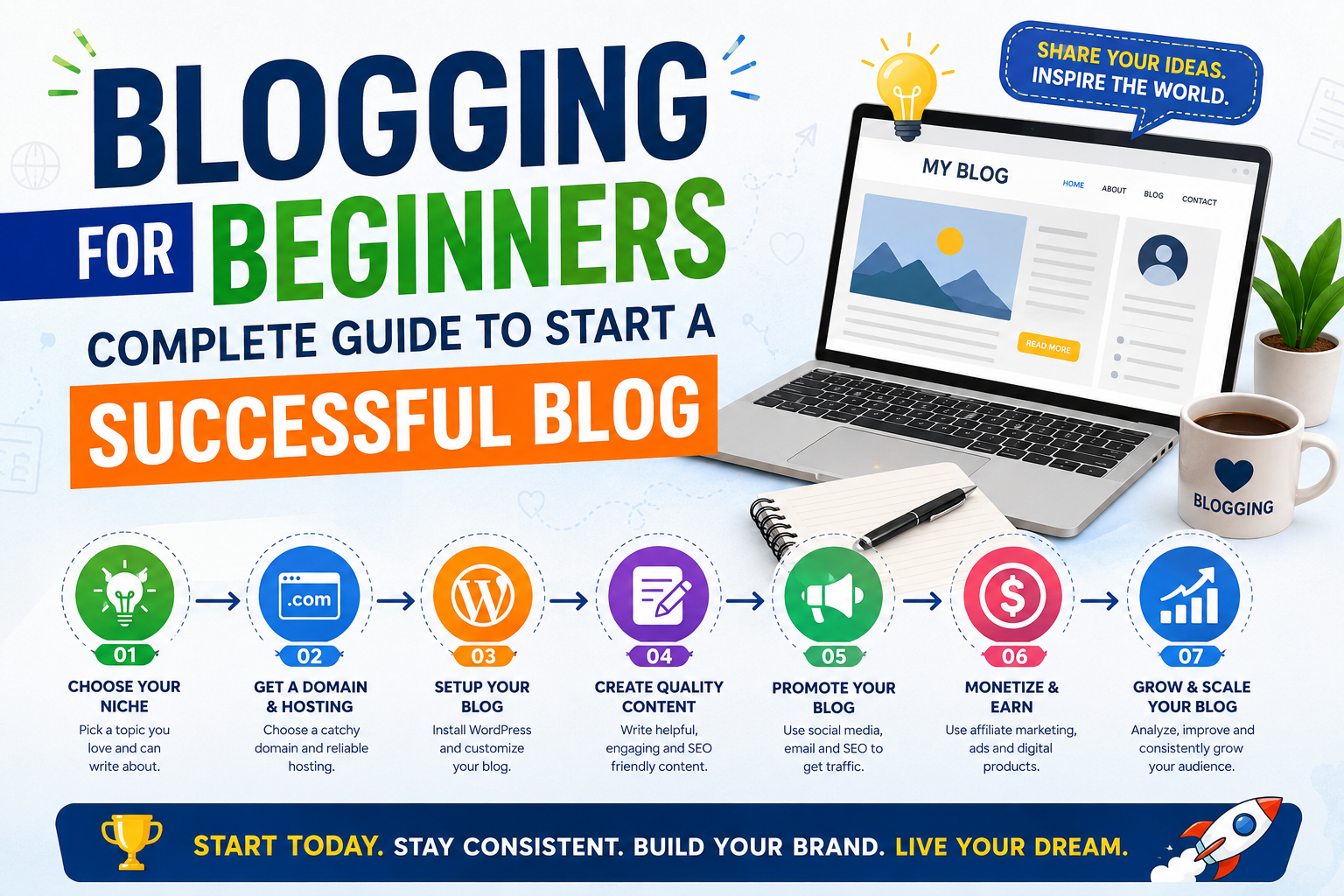
Blogging has become one of the most popular ways to share knowledge, build an online presence, and earn money online. Whether you want to start a personal blog, a business website, or an affiliate marketing blog, blogging offers endless opportunities for growth and success Blogging for Beginners.
Many beginners believe blogging is difficult, but the truth is that anyone can start a blog with the right guidance. Success in blogging requires consistency, quality content, and a clear strategy. This complete guide will help you understand everything you need to know about blogging and how to create a successful blog from scratch Blogging for Beginners.
What Is Blogging?
Blogging is the process of creating and publishing content on a website. These content pieces are called blog posts or articles.
People start blogs for different reasons, including:
- Sharing knowledge
- Building a personal brand
- Promoting a business
- Generating income
- Teaching skills
- Creating an online community
A blog can cover almost any topic, including technology, health, education, travel, finance, fitness, and digital marketing.
Why Start a Blog?
Blogging offers many benefits for individuals and businesses.
Some major advantages include:
- Building online authority
- Increasing website traffic
- Generating passive income
- Improving writing skills
- Creating networking opportunities
- Promoting products and services
A successful blog can become a valuable online asset over time.
Choosing the Right Blog Niche
One of the most important decisions is selecting a niche.
A niche is the main topic your blog focuses on.
Popular blogging niches include:
- Technology
- Digital Marketing
- SEO
- Blogging
- Finance
- Health and Fitness
- Education
- Travel
- Food
- Personal Development
Choose a niche that matches your interests and has audience demand.
Understanding Your Target Audience
Before creating content, understand who will read your blog.
Ask yourself:
- What problems do readers face?
- What information are they searching for?
- What solutions can you provide?
Understanding your audience helps create content that attracts and engages readers.
Selecting a Blogging Platform
A blogging platform is software used to create and manage a blog.
Popular platforms include:
WordPress
WordPress is the most popular blogging platform worldwide.
Benefits:
- Easy to use
- SEO-friendly
- Highly customizable
- Thousands of themes and plugins
Blogger
Blogger is a free blogging platform owned by Google.
Benefits:
- Free hosting
- Simple setup
- Beginner-friendly
For long-term growth, WordPress is usually the better option.
Choosing a Domain Name
A domain name is your website address.
Examples:
- yourblog.com
- example.net
- mywebsite.org
A good domain name should:
- Be short
- Be easy to remember
- Match your niche
- Be easy to spell
A professional domain name improves credibility.
Getting Reliable Web Hosting
Web hosting stores your website files and makes them accessible online.
Good hosting should provide:
- Fast speed
- Strong security
- High uptime
- Good customer support
Reliable hosting improves user experience and SEO performance.
Designing Your Blog
Your blog design creates the first impression.
A good blog should have:
- Clean layout
- Easy navigation
- Mobile-friendly design
- Fast loading speed
- Professional appearance
Visitors should easily find the information they need.
Creating Important Pages
Every blog should include essential pages.
About Page
Tell readers who you are and what your blog offers.
Contact Page
Allow visitors to contact you easily.
Privacy Policy
Explain how visitor information is handled.
Disclaimer Page
Important for affiliate marketing and advertising.
These pages improve trust and professionalism.
Planning Your Content Strategy
Content is the foundation of blogging success.
Create a content plan that includes:
- Blog topics
- Publishing schedule
- Target keywords
- Audience goals
Consistency is key to long-term growth.
Writing High-Quality Blog Posts
Successful blogs publish valuable content.
A good blog post should:
- Solve a problem
- Answer questions
- Provide useful information
- Be easy to read
- Include examples
High-quality content encourages visitors to return.
Understanding SEO for Blogging
SEO helps blogs rank higher on search engines.
Important SEO elements include:
Keyword Research
Find keywords people search for online.
SEO Titles
Create attractive titles that include keywords.
Meta Descriptions
Write clear summaries for search results.
Internal Linking
Link related articles within your blog.
Image Optimization
Compress images and add alt text.
Good SEO helps increase organic traffic.
Creating SEO-Friendly Content
SEO-friendly content improves search visibility.
Tips include:
- Use keywords naturally
- Write clear headings
- Keep paragraphs short
- Add bullet points
- Include internal links
SEO-friendly articles are easier for both users and search engines to understand.
Importance of Consistent Publishing
Many new bloggers quit too early.
Consistency helps:
- Build audience trust
- Improve SEO
- Increase traffic
- Establish authority
Publishing regularly can lead to long-term blogging success.
Promoting Your Blog
Publishing content alone is not enough.
Promote your blog through:
Social Media
Share content on:
- X (Twitter)
Email Marketing
Build an email list and notify subscribers about new posts.
Online Communities
Participate in forums and niche communities.
Promotion helps attract visitors and grow readership.
Building an Email List
An email list is one of the most valuable assets for bloggers.
Benefits include:
- Direct communication
- Increased traffic
- Better engagement
- More conversions
Offer free resources such as guides or checklists to encourage subscriptions.
Using Social Media Effectively
Social media can significantly increase blog traffic.
Best practices:
- Share content regularly
- Create engaging posts
- Respond to comments
- Build relationships with followers
Strong social media presence supports blogging growth.
Common Blogging Mistakes to Avoid
Many beginners make mistakes that slow growth.
Avoid:
Choosing Too Many Topics
Stay focused on your niche.
Ignoring SEO
SEO helps readers find your content.
Publishing Low-Quality Content
Always prioritize value.
Giving Up Too Soon
Blogging requires patience and consistency.
Copying Content
Create original content to build authority.
Avoiding these mistakes improves success chances.
How Bloggers Make Money
One of the biggest reasons people start blogs is to earn income.
Popular monetization methods include:
Google AdSense
Display advertisements and earn revenue from clicks and impressions.
Affiliate Marketing
Promote products and earn commissions.
Sponsored Posts
Work with brands to publish promotional content.
Selling Digital Products
Examples include:
- E-books
- Online courses
- Templates
- Guides
Freelance Services
Offer writing, SEO, or consulting services.
Multiple income streams increase earning potential.
Growing Blog Traffic
Traffic growth takes time and effort.
Strategies include:
- SEO optimization
- Content marketing
- Social media promotion
- Email marketing
- Guest posting
Consistent effort leads to sustainable growth.
Tracking Blog Performance
Monitoring performance helps identify opportunities for improvement.
Useful tools include:
- Google Analytics
- Google Search Console
- Microsoft Clarity
Track:
- Traffic
- Keyword rankings
- User behavior
- Conversion rates
Data-driven decisions improve results.
Future of Blogging
Blogging continues to evolve.
Important trends include:
- Artificial Intelligence
- Voice Search
- Video Content
- Personal Branding
- Interactive Content
Bloggers who adapt to new trends remain competitive.
Benefits of Successful Blogging
A successful blog can provide:
- Financial freedom
- Personal branding opportunities
- Business growth
- Industry authority
- Long-term passive income
The opportunities are almost unlimited.
Conclusion
Blogging is one of the best ways to share knowledge, build an audience, and create income opportunities online. By choosing the right niche, creating valuable content, learning SEO, promoting your blog, and staying consistent, beginners can build successful blogs over time.Blogging for Beginners.
Success does not happen overnight, but with dedication and continuous learning, blogging can become a rewarding and profitable journey. Start with a clear plan, focus on helping your audience, and continue improving your skills as you grow Blogging for Beginners.
SEO Guide for Beginners: Step-by-Step SEO Learning
Google Search Console