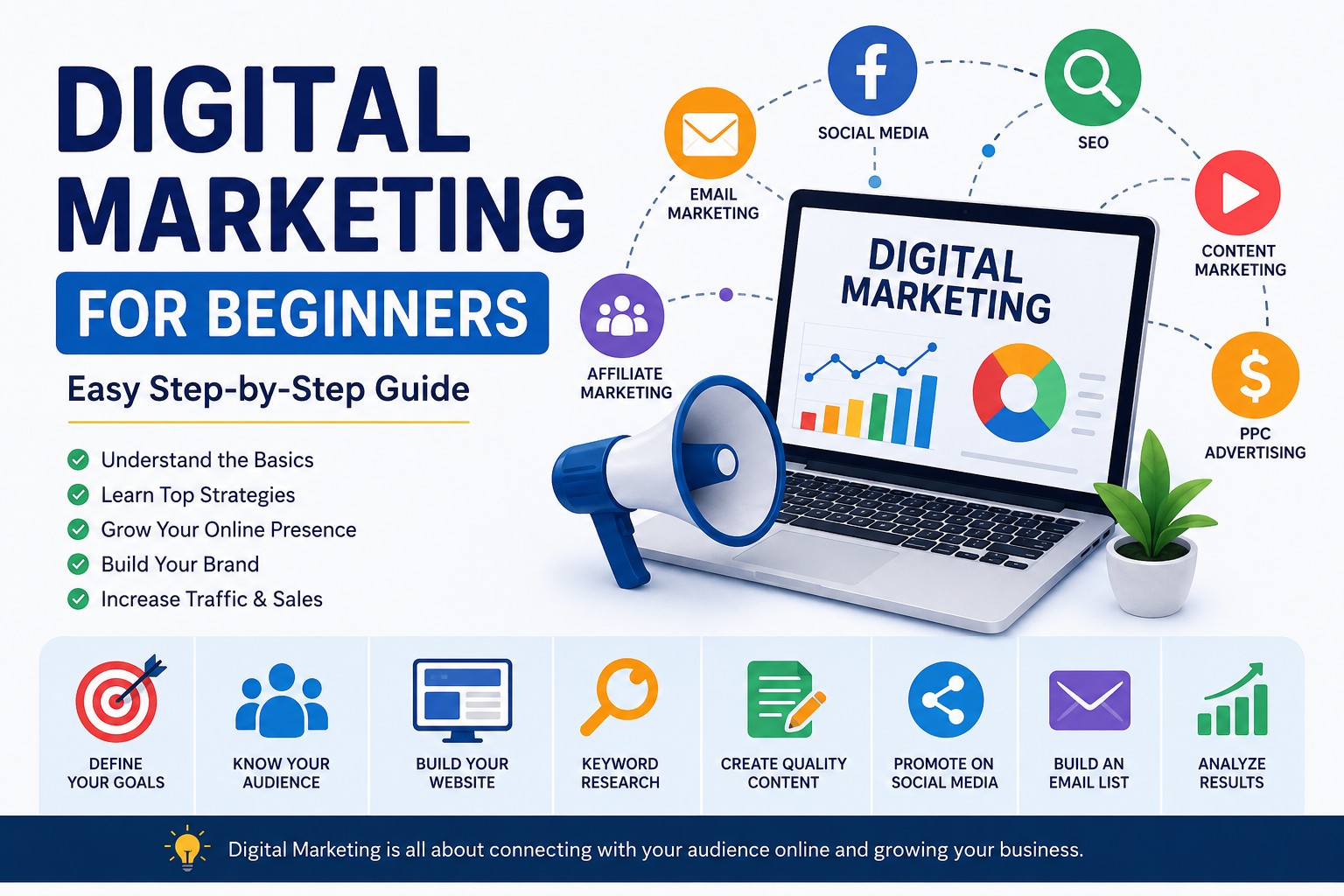
In today’s digital world, businesses and individuals use the internet to reach more people than ever before. Whether you own a small business, run a blog, or want to start an online career, understanding digital marketing is important. This digital marketing guide for beginners will help you learn the basics in simple and easy English.
Digital marketing is the process of promoting products, services, or content through online channels such as search engines, websites, social media platforms, email, and mobile apps. It helps businesses connect with their target audience and increase sales.
What Is Digital Marketing?
Digital marketing refers to all marketing activities that use the internet or electronic devices. Unlike traditional marketing methods such as newspapers and billboards, digital marketing allows businesses to reach people online digital marketing guide beginners.
The main goal of digital marketing is to attract visitors, generate leads, and convert them into customers. It is cost-effective, measurable, and suitable for businesses of all sizes.
Why Is Digital Marketing Important?
Digital marketing has become essential because millions of people use the internet every day. Here are some benefits:
- Reach a global audience
- Cost-effective marketing solution
- Better targeting options
- Easy performance tracking
- Higher return on investment (ROI)
- Increased brand awareness
Businesses that use digital marketing effectively can compete with larger companies and grow faster.
Main Types of Digital Marketing
There are several important areas of digital marketing that beginners should understand.
1. Search Engine Optimization (SEO)
SEO is the process of improving a website so it appears higher in search engine results. When people search for information on Google, websites with good SEO have a better chance of being found.
SEO includes:
- Keyword research
- On-page optimization
- Technical SEO
- Link building
- Content creation
Good SEO helps increase organic traffic without paying for advertisements.
2. Content Marketing
Content marketing focuses on creating useful and valuable content for your audience.
Examples include:
- Blog posts
- Articles
- Videos
- Infographics
- E-books
- Podcasts
High-quality content helps build trust and improves search engine rankings.
3. Social Media Marketing
Social media marketing involves promoting content and engaging with users on platforms such as:
- X (Twitter)
- TikTok
Businesses use social media to build relationships, increase brand awareness, and drive website traffic.
4. Email Marketing
Email marketing is one of the most effective digital marketing methods. It allows businesses to communicate directly with customers through email.
Benefits include:
- Personalized communication
- High conversion rates
- Customer retention
- Affordable marketing
Building an email list can provide long-term business growth.
5. Pay-Per-Click Advertising (PPC)
PPC advertising allows businesses to display ads on search engines and websites.
Popular PPC platforms include:
- Google Ads
- Microsoft Ads
- Facebook Ads
With PPC, advertisers pay only when someone clicks on their ad.
6. Affiliate Marketing
Affiliate marketing is a performance-based strategy where people earn commissions by promoting products or services.
Many bloggers and content creators use affiliate marketing to generate passive income online.
How Search Engines Work
Understanding search engines is important for digital marketing beginners.
When a user searches for something on Google:
- Google crawls websites.
- It indexes content.
- It ranks pages based on relevance and quality.
- The best results appear on the first page.
This is why SEO plays a major role in digital marketing success.
How to Start Digital Marketing Step by Step
If you are new to digital marketing, follow these simple steps.
Step 1: Define Your Goals
Start by identifying your objectives.
Examples:
- Increase website traffic
- Generate leads
- Improve sales
- Build brand awareness
- Grow social media followers
Clear goals help guide your marketing strategy.
Step 2: Identify Your Target Audience
Understanding your audience is essential.
Consider:
- Age
- Gender
- Interests
- Location
- Online behavior
The better you know your audience, the more effective your marketing will be.
Step 3: Create a Professional Website
Your website acts as your online business headquarters.
A good website should:
- Load quickly
- Be mobile-friendly
- Have easy navigation
- Provide useful content
- Include contact information
WordPress is one of the best platforms for beginners.
Step 4: Learn Keyword Research
Keywords are words people type into search engines.
Use tools like:
- Google Keyword Planner
- Ubersuggest
- Ahrefs
- SEMrush
Choose keywords that match your content and audience needs.
Step 5: Publish Quality Content
Content is the foundation of digital marketing.
Create content that:
- Solves problems
- Answers questions
- Provides value
- Uses simple language
- Includes relevant keywords
Consistent publishing helps attract visitors over time.
Step 6: Optimize for SEO
Basic SEO practices include:
- Using keywords naturally
- Writing attractive titles
- Adding meta descriptions
- Using heading tags
- Optimizing images
- Improving page speed
SEO helps your content rank higher in search results.
Step 7: Use Social Media
Share your content on social media platforms where your audience spends time.
Tips:
- Post consistently
- Use engaging visuals
- Respond to comments
- Share useful information
- Build a community
Social media can increase traffic and brand visibility.
Step 8: Build an Email List
Encourage visitors to subscribe to your newsletter.
Offer:
- Free guides
- Checklists
- E-books
- Exclusive content
Email marketing allows you to stay connected with your audience.
Step 9: Analyze Results
Use analytics tools to monitor performance.
Popular tools include:
- Google Analytics
- Google Search Console
- Bing Webmaster Tools
Track:
- Website traffic
- User behavior
- Conversion rates
- Keyword rankings
Data helps improve future marketing efforts.
Essential Digital Marketing Tools
Beginners can use several free and paid tools.
SEO Tools
- Google Search Console
- Ahrefs
- SEMrush
- Ubersuggest
Content Tools
- Grammarly
- Canva
- ChatGPT
Analytics Tools
- Google Analytics
- Microsoft Clarity
Social Media Tools
- Buffer
- Hootsuite
- Meta Business Suite
These tools can save time and improve results.
Common Digital Marketing Mistakes to Avoid
Many beginners make mistakes that slow down progress.
Ignoring SEO
Without SEO, your website may struggle to get organic traffic.
Publishing Low-Quality Content
Content should always provide value to readers.
Not Understanding the Audience
Marketing becomes ineffective if you don’t know who you are targeting.
Inconsistent Posting
Consistency helps build trust and visibility.
Focusing Only on Sales
Provide value before trying to sell products or services.
Not Tracking Results
Without data, it is difficult to improve performance.
Benefits of Learning Digital Marketing
Digital marketing offers many opportunities.
Career Opportunities
Popular roles include:
- SEO Specialist
- Content Writer
- Social Media Manager
- PPC Expert
- Email Marketing Specialist
Business Growth
Business owners can promote products and services online effectively.
Freelancing
Digital marketing skills allow you to work with clients worldwide.
Personal Branding
You can build an online presence and become an authority in your niche.
Future of Digital Marketing
Digital marketing continues to evolve with technology.
Current trends include:
- Artificial Intelligence (AI)
- Voice Search Optimization
- Video Marketing
- Influencer Marketing
- Automation Tools
- Personalized Marketing
Learning these trends can help you stay competitive in the future.
Final Thoughts
This digital marketing guide for beginners provides a simple introduction to online marketing. Digital marketing includes SEO, content marketing, social media marketing, email marketing, PPC advertising, and affiliate marketing. By learning these skills step by step, beginners can build a strong online presence and achieve their goals.
Start by creating quality content, optimizing your website for search engines, understanding your audience, and using social media effectively. With patience and consistency, digital marketing can help grow your website, business, or personal brand successfully.